

Runes are mysterious, beautiful, and deeply connected to the past. At MysticLog, we’ve seen how they draw people in with their elegant lines and the playful, ancient riddle of their meanings. Whether you’re a beginner or a seasoned practitioner looking to solidify your practice, we’re here to help you learn, practice, and grow with these ancient symbols—making sense of both their history and their magic. Let’s walk step by step through what runes are, their origins, their deep meanings, and practical advice on reading and interpreting them, all while demystifying myths that surround these fascinating stones.
The roots of runic writing: History and origins
When we start learning about runes, we start with the most ancient and widely studied script: the Elder Futhark. The name “Futhark” comes from the first six letters (F-U-TH-A-R-K), and it’s the oldest known runic alphabet, used by Germanic peoples from around the 2nd to the 8th centuries CE.
This writing system was more than just a set of letters—it carried with it magical and symbolic power. Carved onto stones, wood, metal, and bone, runes were often messages, dedications, or protective charms. Findings from research at Liberty University analyze the development of Norse runes and explore their representation over centuries. During this early era, runes served not only as tools for communication but also as bridges to the mystical and unknown.
The Elder Futhark originally had 24 characters. Over time, as Scandinavian culture shifted during the so-called Migration Period and early Viking Age, this alphabet evolved. As Scandinavia entered a new era, a simplified script appeared: the Younger Futhark, with just 16 runes. Research from the University of Washington discusses these significant cultural and script transitions, showing us how runes remained a living, adaptable language.
But the symbols themselves never lost their intrigue. They invite us to look deeper, to guess at hidden meanings, and to imagine the people who carved them so long ago.
The Elder Futhark: Structure and meaning
For those just starting, the Elder Futhark is the best gateway into runic study. It consists of three groups, or “aetts,” each with eight runes. These groupings help organize meanings and reflect layers of myth and cosmology. Here’s a quick run-down of the three aettir:
- First Aett (associated with Freyr or Freyja): Related to beginnings, wealth, and fertility.
- Second Aett (connected to Heimdall): Concerned with challenge, transformation, and emotional journeys.
- Third Aett (linked to Tyr): Touches on fate, wisdom, and the end of cycles.
Each rune holds its own story. The Fehu rune (ᚠ), for example, means ‘cattle’ or ‘wealth,’ while Algiz (ᛉ) stands for protection. We encourage you to explore detailed meanings and historical backgrounds in our own resource, Elder Futhark runes guide.
Symbolic meanings and Norse divination
Runes appear everywhere in Norse legends and sagas—on swords, stones, and jewelry. Their use in divination, though, is what fascinates us most today. In olden times, seers and wise folk would cast or draw runes to answer questions, foretell coming events, or seek guidance.
Runes speak in whispers and symbols, not plain language.
It wasn’t just about predicting the future. Runes were magical tools—used for blessings, curses, protection, or empowerment. As a result, each rune’s shape, name, and sound became keys to deeper mysteries. A runic reading might play on both the literal meaning (“cattle,” “need,” “joy”) and the wider lesson those names suggest. We’ve found that modern readers are drawn to this layered wisdom.
For a fuller understanding of their historical and magical uses, check out our complete guide to runes, their history, and meanings.
How to cast runes: Step-by-step
We’re often asked, “How do you actually do a runic reading?” It’s simpler than it seems. Here’s the essential process:
- Set your intention. Decide what you want to ask or learn. Clarity is your best friend here—vague questions often lead to unclear answers.
- Prepare your runes. Place your rune set (usually 24 stones, tiles, or pieces of wood) in a bag. Some practitioners like to light a candle, focus on their breath, or say a small invocation before beginning.
- Draw or cast runes. You may:
- Draw a single rune for a simple answer.
- Pull three runes, representing Past, Present, and Future.
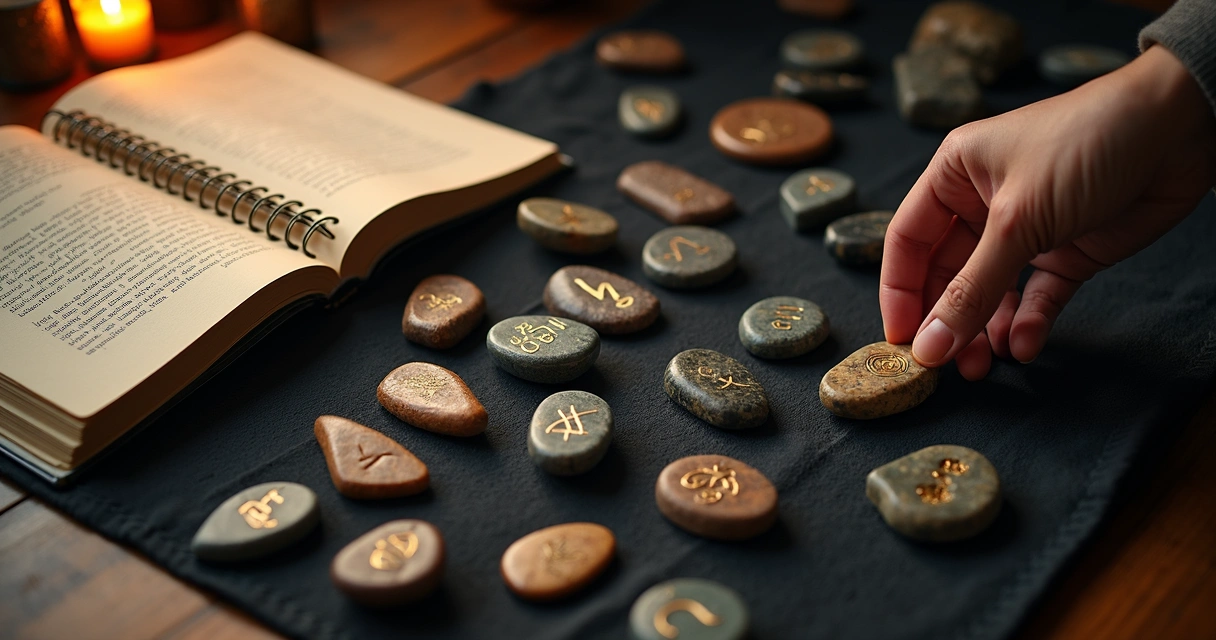
- “Cast” several runes onto a cloth, noting which ones land face-up or closest to the center.
- Read the results. Interpret each rune’s meaning (not just its traditional symbol, but also what it “feels” like in the moment). Look for patterns, opposites, or reinforcing symbols.
- Record your reading. We believe keeping notes is key for learning and seeing patterns over time. This is where digital logs (like MysticLog) help you keep everything safe, clear, and easy to revisit.
A successful reading blends traditional meanings and personal intuition. There’s no “wrong” way—just respectful practice and careful observation. For those wanting more detail, you may enjoy our article on how to read runes for beginners.
 Common runic spreads and casting methods
Runic reading methods are flexible. Some people use a single rune for a quick insight, while others enjoy structured spreads that resemble those used in Tarot. Here are some of the most popular techniques:
- Single pull: Choose a rune from the bag—great for daily guidance.
- Three-rune spread: Lay out three runes left-to-right: Past, Present, Future or Situation, Challenge, Outcome.
- Five-rune cross: Arrange five runes in a cross shape (center, top, bottom, left, right). The central stone represents your focus. The others provide context: what’s above or below the surface, hidden influences, and possible answers.
- Full casting: Toss a handful of runes onto a cloth and read those that land face-up, closest to the center, or in specific zones of the cloth—each area might mean something different.
- Circle of runes: Set runes in a circle, then draw three to five to represent different aspects of your question.
These patterns are not fixed rules. We encourage you to experiment and record what works best for you. Keeping notes, as we do in MysticLog, turns each reading into a learning opportunity.
Interpreting runes: Meaning, context, and intuition
Deciphering runes is part art, part research, and part personal intuition. The “root meaning” of each rune helps guide you, but the situation and your instinct matter just as much. Here are our top tips for interpretation:
- Start with the traditional meaning (for instance, Ansuz is about wisdom and inspiration).
- Consider the context of your question. “Wealth” might mean money one day, or emotional abundance another.
- Pay attention to rune position: beginning, end, or middle of the spread can change the emphasis.
- Notice relationships—do runes repeat, contrast, or reinforce each other?
- You may also see “reversals” or “merkstave” (upside-down runes), suggesting blocked or opposite meanings; some readers use them, others prefer not to.
We recommend working with a reliable reference and building your intuition over time. Detailed rune-by-rune analysis can be found in sources like our Nordic runes and divination guide. The most fulfilling progress comes when you practice regularly and make recordkeeping a habit, as MysticLog was designed to support.
Using intuition when reading runes
This part surprises most beginners. Sometimes, a rune’s message comes less from its dictionary definition and more from a sudden sense or image it brings to mind. For example, we’ve pulled Raido when thinking about an emotional journey, and realized it “felt” like the start of an inner pilgrimage—not just physical travel.
Trusting what rises up can be just as helpful as reading old sources. Both layers have value. Practice, reflection, and openness to small, subtle impressions enrich your readings. MysticLog’s AI assistant, for example, can be especially helpful in reflecting back your impressions and guiding your intuition without overshadowing your unique perspective.
Making your own rune set: Crafting and consecrating
We find that crafting your own runes creates a strong connection to your practice. Materials vary, but wood, stone, or clay are traditional and full of meaning. Here’s a simple process for beginners:
- Choose your materials. Wood (like ash or oak) is classic. Small smooth stones or clay disks work beautifully as well.
- Shape your pieces. Sand or smooth them to a comfortable size, usually about the size of a large coin.
- Mark the runes. Carefully inscribe each of the 24 Elder Futhark symbols onto your pieces. Paint, carve, or engrave as you feel inspired. Traditional ink is usually red, recalling old Northern customs.
- Consecrate your runes. Once finished, hold your set and say a blessing or intention. “I dedicate these runes to truth, guidance, and learning.” Leave them under the moon or in a sacred place to “rest” and attune before first use.
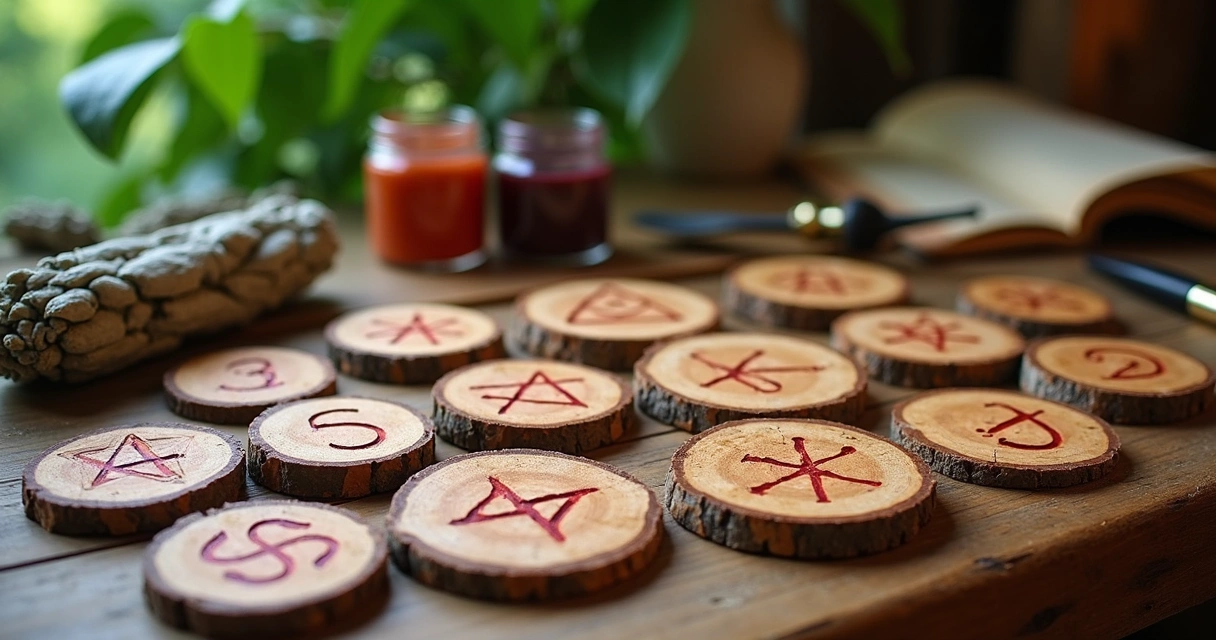 For many, this simple ritual forms the heart of their bond with the runes. The act of making, blessing, and handling your stones becomes part of their power in your life.
The mystery of bind runes: Purpose and creation
Bind runes are created by combining two or more rune symbols into a single design. These have historical precedent—not just as magical symbols, but as secret signatures or pendants. The intention is to blend and intensify the effects of the combined runes.
For example, combining Algiz (protection) and Ehwaz (partnership) would make a powerful charm for a relationship. These designs can be worn, kept as amulets, or used in rituals.
The process is simple:
- Decide your intention (protection, clarity, success, new beginnings, etc.).
- Select two or three runes whose core meanings fit your goal.
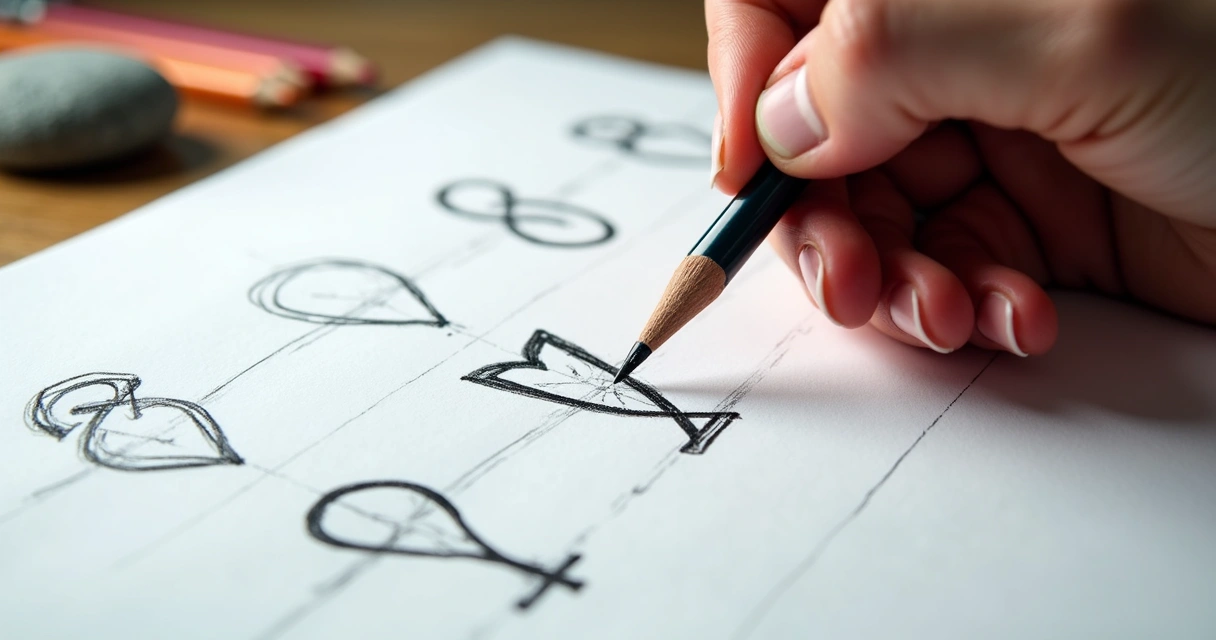
- Draw or overlay the rune shapes, sharing vertical or horizontal lines for a balanced look. Simplicity is best.
- Keep the design safe—don’t share bind runes lightly, as they’re personal and sometimes best kept private.
Strong intentions are at the heart of effective bind runes.
We believe bind runes open up creative possibilities to weave the magic of ancient symbols into daily life.
 Common myths and misconceptions about runes
Runes are often surrounded by misunderstandings. One of the most persistent myths is that runes are only “fortune-telling tools.” In our experience, they’re best seen as tools for reflection and guidance. They offer possibilities and advice, not unchangeable destiny.
Another common myth is the idea that each rune has only one fixed meaning. As studies at the University of California, Berkeley show, the meanings of runes are layered—sometimes poetic, sometimes practical, and always open to context.
Some people believe that only those with “Nordic” heritage should use runes. Historically, runes spread far beyond Scandinavia, and the runic tradition welcomes sincere learners from all backgrounds. What matters most is respect for the symbols and for the cultures that shaped them.
You can find more about myths and historical realities in our runes history guide.
Ethical reading and responsible practice
Practicing runic reading with integrity is essential for everyone, especially if you offer advice to others. Here is what we believe shapes responsible and ethical rune work:
- Be honest about your role. You’re a guide and interpreter, not an all-knowing oracle.
- Keep readings confidential. Protect the privacy of everyone involved.
- Avoid giving life-or-death or medical advice. Runes can guide emotional or spiritual matters, not replace expert help.
- Encourage self-empowerment. The best readings offer possibilities, not certainties.
- Continue learning. A humble approach deepens your respect for the tradition.
Ethics give the wisdom of the runes meaning in practice.
As your practice deepens, keeping a log of your readings—observing what happens after you draw certain runes—is both educational and grounding. Modern tools, such as what we provide at MysticLog, make this process secure, thorough, and organized.
The role of memory and recordkeeping
Every runic reading is a snapshot in time. We have found that the most effective way to learn from runes is by tracking interpretations, noting reflections, and returning to previous consultations. Over weeks and months, patterns emerge; your readings improve, and your understanding of rune meanings deepens.
Traditionalists often kept notebooks; now, digital options provide safer and more accessible logs. In our own platform, these features are enhanced with the help of an AI assistant, which can suggest questions, recall past readings, or offer reminders on symbolic meanings in a conversational way.
Studying, practicing, and deepening your connection
Becoming fluent in the runes takes both study and regular interaction. We suggest starting with a daily draw or brief meditation with a single rune. Over time, try different spreads, make your own set, or craft bind runes with purpose.
Revisit trusted sources often. For additional study and reference, you might want to read about protection runes in Norse tradition, which are among the most widely used runes for practical magic and daily rituals.
The more you use and reflect on runes, the more nuanced your interpretations will become. Technology today can be a wonderful assistant here, helping ensure your learning path is consistent and your insights are not lost.
How technology like MysticLog supports your runic journey
As a modern diviner or student, integrating technology can feel like inviting new magic into old traditions. We built MysticLog so that rune readers could:
- Record, organize, and reflect on each reading
- Keep querent notes private, yet accessible
- Use AI assistance without losing their own intuition
- Practice at their own pace—in private or with clients
- Discover historical meanings while being prompted to make personal connections
We believe respectful engagement—blending history with modern tools—brings more insight, clarity, and growth than working alone with the symbols. The goal is to nurture your confidence and skill, preserving tradition while embracing new ways to learn.
Conclusion: Let the runes speak—and keep learning
Runes offer an ancient language for seekers and counselors, a method for both divination and self-development. As we learn their meanings, explore casting techniques, and reflect on our readings over time, we build a lasting, personal connection. The best way forward is by curiously engaging with tradition, practicing ethical reading, and tracking your progress. If you’re ready to organize and amplify your runic path, we invite you to try MysticLog: a supportive digital companion for thoughtful, inspired rune readers, new and experienced alike.
Frequently asked questions
What are runes and how do they work?
Runes are ancient symbols, primarily from the Elder Futhark alphabet, used for writing, magic, and divination in early Germanic cultures. Each rune combines a sound, a specific meaning, and a magical association. In readings, runes are drawn or cast, and their arrangement and symbolism are interpreted to offer guidance, reflection, or insight into a question or situation.
How do I cast runes for readings?
To cast runes, first focus your intention and question, then draw or cast runes from your set onto a clean surface like a cloth or table. Different spreads—a single rune, three-rune spread, five-rune cross, or a full casting—can be used. Interpret the meanings of the runes that appear, considering their traditional symbolism, their position in the spread, and your intuition. For step-by-step guidance, see our explanation above.
What are the best runes for beginners?
Most beginners start with the complete Elder Futhark set of 24 runes, as it offers a balance of clear meanings and historical relevance. Among these, runes like Fehu (abundance), Uruz (strength), and Ansuz (wisdom) are especially accessible and often come up in basic readings. We recommend starting with all 24 to get a full sense of the system and learn naturally over time.
How can I interpret rune meanings accurately?
Accurate interpretation comes from studying traditional meanings, practicing regularly, and recording your readings for future review. Understanding context is key: the same rune can have different messages based on the question and spread. Using references and developing your intuition will improve accuracy—our platform, MysticLog, is designed to help you monitor and revisit interpretations with ease.
Where can I buy quality rune sets?
You can find rune sets at reputable metaphysical shops, online marketplaces, and artisan crafters. Look for sets made of wood, stone, or clay with carefully inscribed symbols. While we encourage making your own for a personal connection, many beautiful, ready-made sets are available. Always choose sellers with clear descriptions, good reviews, and traditional designs to ensure authenticity and quality.


